Publications
Publications by categories in reversed chronological order.
2025
- InterPACK
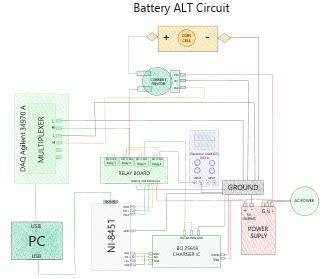 Degradation Modeling and Lifetime Prediction of Li-Pouch Cells Subjected to Extreme Thermal ConditionsAditya Amatya, and Pradeep LallIn International Electronic Packaging Technical Conference and Exhibition, Oct 2025
Li-ion pouch cells are ubiquitous in electric vehicles, aerospace systems, and portable electronics because of their high energy density and efficiency, yet their long-term reliability under sustained extreme temperature operation remains inadequately characterized. This paper presents a model to predict the capacity evolution of Li-ion pouch cells under sustained high-temperature operation. In the present study, 1080 mAh pouch cells were subjected to continuous charge–discharge cycles at 40°C using a custom accelerated-life-testing (ALT) setup that incorporated a LabVIEW-controlled NI-8451 interface, BQ 25618 charging IC, 3A current sensor, electronic load, and relay board, while voltage, current, and cumulative-time profiles were recorded for every cycle. Cycle-wise capacity and internal resistance were subsequently calculated, and regression models were developed to predict state of health (SOH) and remaining useful life (RUL) as explicit functions of cycle number under thermal stress. The resulting dataset constitutes the derived SOH/RUL estimators enable quantitative comparison with room-temperature cycling. The findings provide predictive methods that can inform robust battery-management strategies for consumer-electronics applications operating in demanding thermal environments.
@inproceedings{Amatya2025LiPouch, title = {Degradation Modeling and Lifetime Prediction of Li-Pouch Cells Subjected to Extreme Thermal Conditions}, author = {Amatya, Aditya and Lall, Pradeep}, booktitle = {International Electronic Packaging Technical Conference and Exhibition}, volume = {89299}, pages = {V001T03A022}, year = {2025}, month = oct, publisher = {American Society of Mechanical Engineers}, doi = {10.1115/IPACK2025-169163}, url = {https://asmedigitalcollection.asme.org/InterPACK/proceedings/InterPACK2025/89299/V001T03A022/1229574}, } - InterPACK
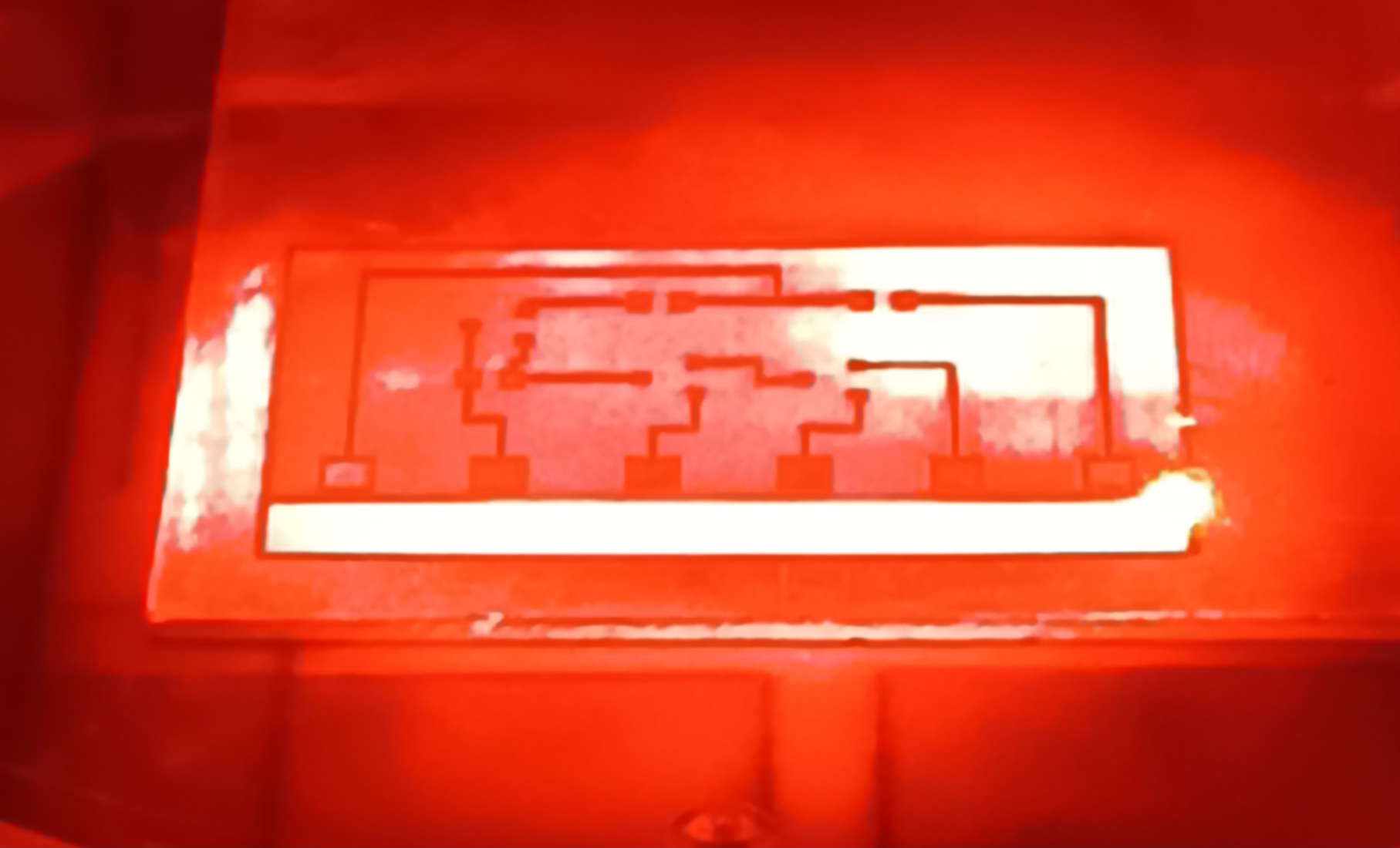 Manufacturing Process for High-Temperature Capable Semi-Additive Logic Gate Circuits on Ceramic SubstratesAditya Amatya, Pradeep Lall, and Scott MillerIn International Electronic Packaging Technical Conference and Exhibition, Oct 2025
The reliability and performance of electronic circuits in automotive applications depend heavily on their capability to withstand elevated operating temperatures, often exceeding 150°C. Traditional electronic packaging technologies and silicon-based substrates frequently suffer from significant degradation and reliability issues under such extreme thermal conditions. This creates a critical need for alternative materials and innovative manufacturing methods to ensure circuit stability and operability. This paper explores the use of copper-clad ceramic substrates in conjunction with advanced laser patterning techniques to fabricate high-temperature capable logic gate circuits. Silicon carbide (SiC) MOSFETs were chosen due to their exceptional thermal stability, and SAC305 solder was employed for reliable component interconnection. Three essential logic gates (NAND, NOR, and NOT) were prototyped and rigorously tested across temperatures ranging from 23°C to 250°C. Experimental results indicated stable circuit performance up to approximately 200°C, beyond which a marked reduction in output voltage and threshold voltage was observed. The findings highlight the potential of copper-clad ceramic substrates and semi-additive manufacturing processes in addressing the high thermal and reliability demands of automotive electronic systems, paving the way for their adoption in next-generation automotive applications.
@inproceedings{Amatya2025Manufacturing, title = {Manufacturing Process for High-Temperature Capable Semi-Additive Logic Gate Circuits on Ceramic Substrates}, author = {Amatya, Aditya and Lall, Pradeep and Miller, Scott}, booktitle = {International Electronic Packaging Technical Conference and Exhibition}, volume = {89299}, pages = {V001T06A005}, year = {2025}, month = oct, publisher = {American Society of Mechanical Engineers}, doi = {10.1115/IPACK2025-169167}, url = {https://asmedigitalcollection.asme.org/InterPACK/proceedings/InterPACK2025/89299/V001T06A005/1229557}, } - ITherm
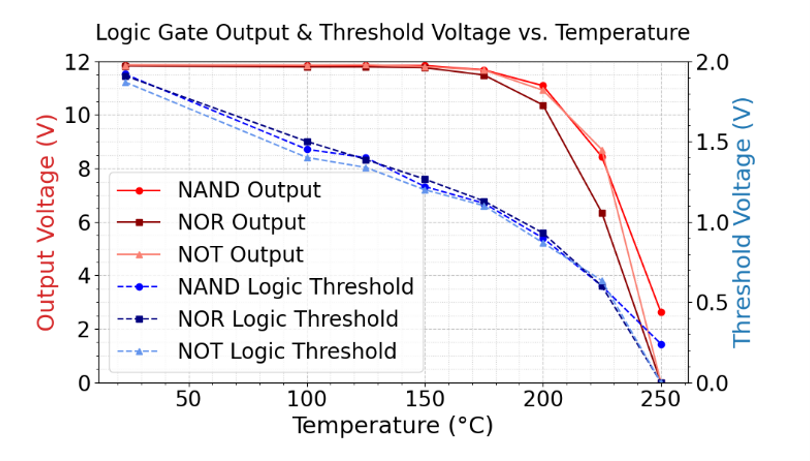 Development of High-Temperature Capable Semi-Additive Logic Gate Circuits on Copper-Clad Ceramic Substrates for Automotive ApplicationsAditya Amatya, Pradeep Lall, Ved Soni, and Scott MillerIn 2025 24th IEEE Intersociety Conference on Thermal and Thermomechanical Phenomena in Electronic Systems (ITherm), May 2025
The need for innovative manufacturing techniques and materials for electronic circuits is growing quickly in automotive applications due to the increasing demand for high performance. The existing electronic packaging fails to meet the high-temperature requirements of modern automotive applications, which operate above 150°C. This extreme operating temperature degrades the performance of electronic circuits. It causes reliability issues over time which creates a need for circuit designs using new manufacturing techniques that can maintain its performance at even extreme temperatures condition. The major focus of this research is to develop and test high-performance logic gate circuits on copper-clad ceramic substrates using laser pattern manufacturing techniques. These circuits can withstand high-temperature conditions relevant to current automotive applications. This work will validate the reliability and operability of these circuits at high temperatures and focus on their integration with SiC devices in thermally enhanced additive packaging. The traditional methods do not fully utilize the advanced manufacturing techniques for electronic packaging. This work avoids these limitations by using copper-clad ceramic substrates that improve thermal conductivity and integration for high-temperature applications. Utilizing copper-clad ceramic substrates, three types of logic gates—NAND, NOR, and NOT—were fabricated, with three samples of each tested at room temperature (23°C), 125°C, and 175°C. SiC MOSFETs were selected for their superior thermal stability, and SAC 305 was used as the interconnect material for component attachments. The circuits were designed and optimized using LTSpice simulations, fabricated through laser patterning techniques, and assessed for signal integrity and performance reliability. Results indicate that the circuits maintain operational stability across the temperature range, demonstrating the potential of copper-clad ceramic substrates and advanced manufacturing methods to meet the thermal and reliability demands of automotive applications.
@inproceedings{Amatya2025LogicGates, title = {Development of High-Temperature Capable Semi-Additive Logic Gate Circuits on Copper-Clad Ceramic Substrates for Automotive Applications}, author = {Amatya, Aditya and Lall, Pradeep and Soni, Ved and Miller, Scott}, booktitle = {2025 24th IEEE Intersociety Conference on Thermal and Thermomechanical Phenomena in Electronic Systems (ITherm)}, pages = {1-10}, year = {2025}, month = may, publisher = {IEEE}, doi = {10.1109/ITherm55376.2025.11235774}, url = {https://ieeexplore.ieee.org/abstract/document/11235774}, } - ITherm
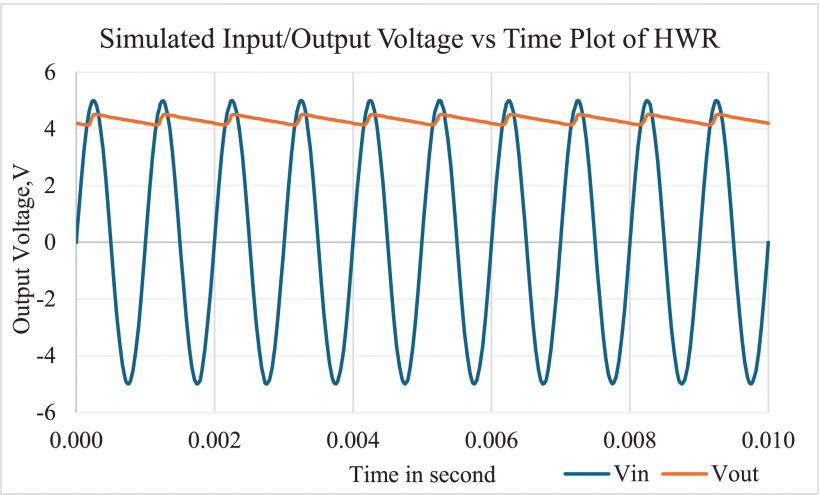 Evaluation of High-Temperature Performance of Semi-Additive Rectifier Circuits up to 175°CBishal Bashyal, Pradeep Lall, Ved Soni, Aditya Amatya, and Scott MillerIn 2025 24th IEEE Intersociety Conference on Thermal and Thermomechanical Phenomena in Electronic Systems (ITherm), May 2025
Rectifiers, including half-wave and full-wave types, are fundamental components in power conversion circuits, converting alternating current (AC) to direct current (DC), and being used in various applications. Generally, diodes and rectifiers work well and are studied up to 125°C. Temperature changes can significantly affect their effectiveness and performance, especially at temperatures up to 175°C. High-temperature operation results in the rectifier’s efficiency loss due to high heat dissipation and other changes. The performance of rectifiers, including noise immunity and reliability, diminishes as temperatures rise, particularly in harsh environments like automotive and aerospace applications. The testing undertaken in the present study will provide valuable data for optimizing rectifier performance and ensuring the durability of electronic devices that operate in high-temperature scenarios. Data has been presented based on a detailed examination of both half-wave and full-wave rectifiers subjected to controlled high-temperature conditions. Performance metrics are offered at three critical stages: before, during, and after exposure to elevated temperatures. These metrics are compared to the room temperature datasets or the standard dataset. This approach will allow us to analyze the impact on diode characteristics, such as forward voltage drop and leakage current, and overall rectifier efficiency. By evaluating these factors, one can understand how high temperatures influence the performance and reliability of rectifiers. Results presented in the paper focus on how high temperatures impact the efficiency and output characteristics (e.g., DC output voltage and ripple) of half-wave and full-wave rectifiers by comparing the data for varied temperatures and with room temperature/standard data. In addition, operational stability and reliability are presented under prolonged high-temperature conditions.
@inproceedings{Bashyal2025Rectifier,
  title = {Evaluation of High-Temperature Performance of Semi-Additive Rectifier Circuits up to 175°C},
  author = {Bashyal, Bishal and Lall, Pradeep and Soni, Ved and Amatya, Aditya and Miller, Scott},
  booktitle = {2025 24th IEEE Intersociety Conference on Thermal and Thermomechanical Phenomena in Electronic Systems (ITherm)},
  pages = {1-11},
  year = {2025},
  month = may,
  publisher = {IEEE},
  doi = {10.1109/ITherm55376.2025.11235806},
  url = {https://ieeexplore.ieee.org/document/11235806},
}
2020
- JAAE
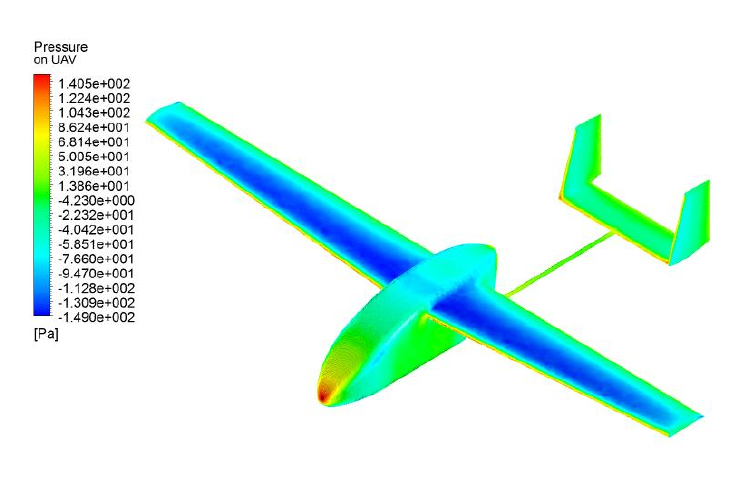 Design and Analysis of Twin-Vertical-Tailed Fixed-Wing Unmanned Aerial VehicleK. Darlami, A. Amatya, B. Kunwar, S. Poudel, and U. DhakalJournal of Automation and Automobile Engineering, Nov 2020
Unmanned Aerial Vehicles possess characteristics that make them suitable for use in multiple areas. This project proposes the design of a small fixed-wing UAV that can be used to carry a payload of around 1 kg. The design is developed performing aerodynamic, structural, and stability analysis using analytical methods as well as commercial code. It is then fabricated into a physical model. Take-off is achieved by launching with the hand or a launcher. Low stall speed allows the UAV to land softly during landing. Twin vertical stabilizers are used, one at each end of the horizontal stabilizer, to reduce the effect of propeller slipstream. Pusher configuration is chosen to allow unobstructed view when imaging devices are attached to the nose of the UAV.
@article{FixedWinguav2020,
  title = {Design and Analysis of Twin-Vertical-Tailed Fixed-Wing Unmanned Aerial Vehicle},
  author = {Darlami, K. and Amatya, A. and Kunwar, B. and Poudel, S. and Dhakal, U.},
  journal = {Journal of Automation and Automobile Engineering},
  volume = {5},
  issue = {3},
  pages = {12-30 },
  year = {2020},
  month = nov,
  publisher = {MAT Journals},
  doi = {10.46610/JoAAEn.2020.v05i03.003},
  url = {https://www.researchgate.net/publication/347653089_Design_and_Analysis_of_Twin-Vertical-Tailed_Fixed-Wing_Unmanned_Aerial_Vehicle},
  dimensions = {true},
}